 Several reasons. As John deCaro states on his very informative website BuyExploreryachts.com:
 "Steel, aluminum, fiberglass and all of its derivatives all have advantages and disadvantages. In my opinion, a steel hull offers the best all-round qualities. Low cost of construction, excellent abrasion resistance, ease of repair (newly developed coatings greatly decrease maintenance), durability, and high resistance to impact damage are only a few of these qualities."
I agree.

And I wanted a full displacement vessel. Quoting John again:
"Why is this important, what is the difference from a semi displacement vessel and is one better then the other? Both types of vessels are equally GOOD for their intended use. If you intend to travel only in protected and semi protected waters “coastwise” and want to go faster then what the water line length will allow, semi displacement is for you. If, however you want a long-range offshore vessel designed to handle demanding conditions then full displacement is the only choice. "
"Why is this important, what is the difference from a semi displacement vessel and is one better then the other? Both types of vessels are equally GOOD for their intended use. If you intend to travel only in protected and semi protected waters “coastwise” and want to go faster then what the water line length will allow, semi displacement is for you. If, however you want a long-range offshore vessel designed to handle demanding conditions then full displacement is the only choice. "
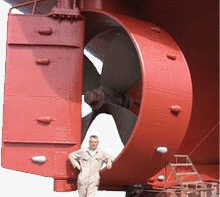
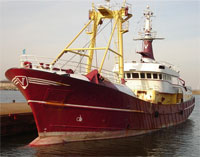
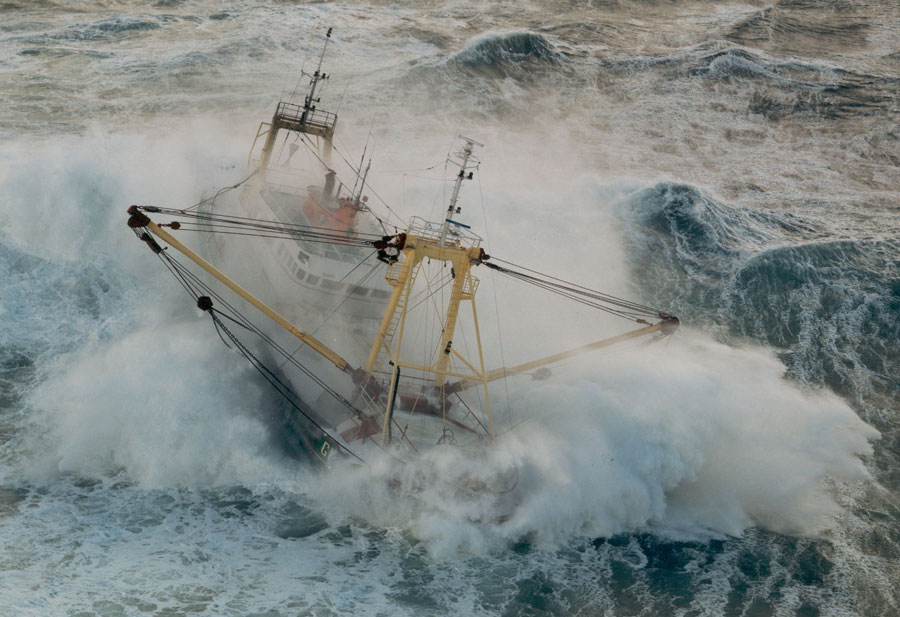
North Sea trawlers are some of most seaworthy vessels around, designed to be at sea even if the weather is not for cruising! These pictures show what you cannot do with 'tupperware' :-).
And, with proper maintaince and professionally done paint job, steel ships will outlast fiberglass.